
Mount Etna
Catania’s volcano
Mount Etna: the impressive spectacle of nature, snow and lava just minutes from Hotel Nettuno
Mount Etna is the highest active volcano in Europe, but it has also always been the volcano of Catania and the Catanian people, who respect or fear it, calling it “Iddu” (“He” in Sicilian dialect).
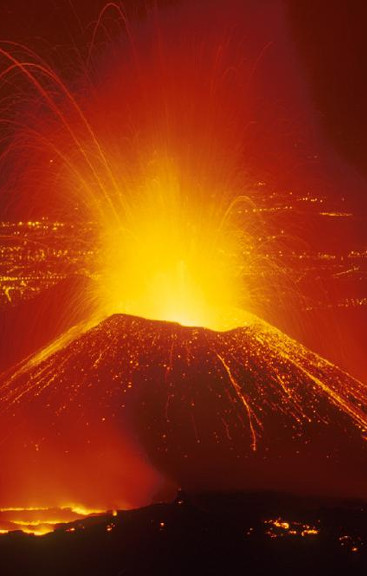
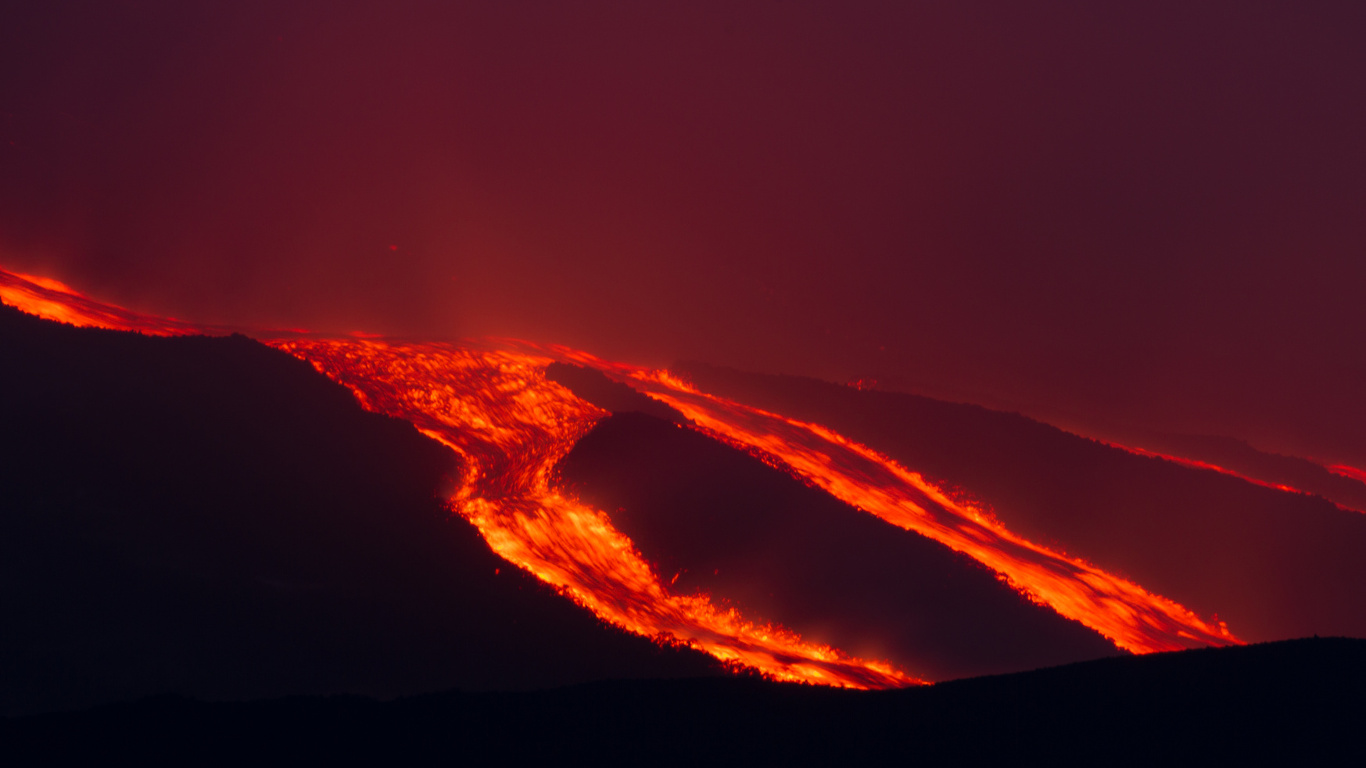
Mount Etna is frequently active: seismic and telluric movements, fountains of lava, red, incandescent rivulets of magma that impressively streak the black flanks of the volcano, smoke, ash and volcanic rock particles that often reach the city, colouring it grey.
Photographers, tourists, adventurous skiers and the merely curious capture spectacular images that make their way around the world time and time again.
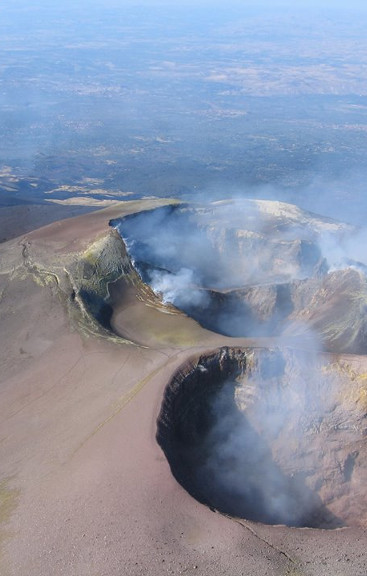
With regard to its morphological origins, Mount Etna is a volcanic-tectonic system created by the formation of a reservoir located at a depth of between 8,000 and 15,000 km from sea level, fed by molten material rising from the mantle. Compared to other volcanoes, it is relatively young, with its first signs of activity between 600,000 and 500,000 years ago, and developing in various phases with distinct characteristics. It exceeds 3,350 m in height and the expanse of its base exceeds 35 km. It has 4 main craters and its flanks are scattered with a myriad of cinder cones that have formed during numerous eruptions throughout its history.
On its slopes you can find the north-eastern zone, densely populated and rich in vegetation, and the western zone, where the terrain has been left barren by volcanic lava streams or “sciare”. The southern slope is where you will find bars, restaurants, car parks, the cable car, the famous Rifugio Sapienza mountain refuge and the permanent geophysics and volcanology observatory, which constantly monitors the volcano’s activity.
Hotel Nettuno is only a 50-minute drive from Europe's most famous volcano.
Sport and adventure on Europe's highest active volcano
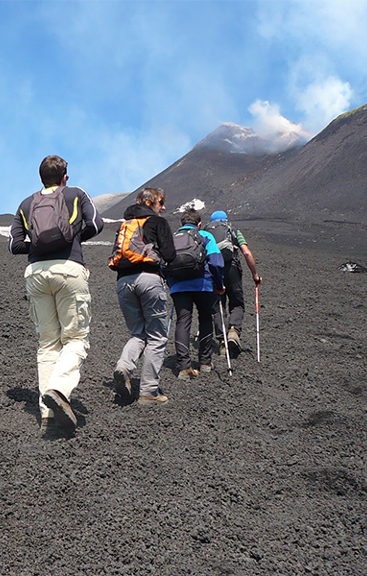
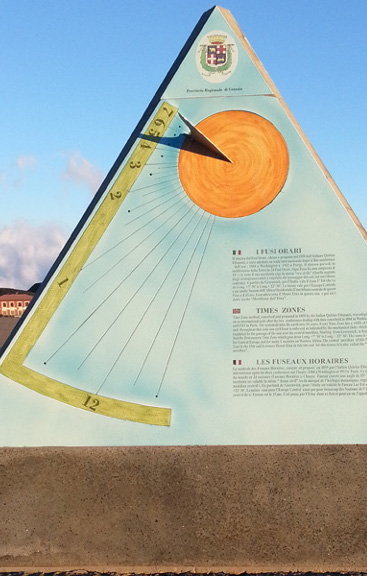
The cable car is a convenient way to reach the Rifugio Sapienza at an altitude of 2,500 m above sea level, from where you can access the ski lifts in winter and excursions to the central craters throughout the year. Don't miss the sundial located on Etna's meridian with its peculiar pyramid shape.
In summer you can enjoy walks of varying intensity and difficulty on signposted trails, trekking, both mountain and volcano-related, and cycling. There are numerous trails to choose from for both sports and nature lovers. Inside Etna National Park there are also recreational and educational attractions for adults and children alike: amusement parks, the Etna Museum (“Museo Vulcanologico dell’Etna”) and even a botanical garden!
For more information on guided tours and various excursions, please contact the Hotel Nettuno help desk.
The origins of Mount Etna
history, myth and legend
The etymology of the name Etna has very distant roots. It was, in fact, the Greeks who gave it this name in the 7th century BC. The name “Aitna” literally means “to burn”. Later under Arab domination, it was called “Jabal al-burkān” (Volcano), a name that was later changed to “Mons Gibel” (twice the mountain), hence the commonly used term “Mongibello”, a name popular among the older inhabitants of the town, which is used today to refer to the summit of Mount Etna.
There are numerous legends attributed to the birth and formation of this mountain, mostly of mythological origin. The most famous of these links the formation of the volcano with the story of Enceladus, elder brother of the Giants, and his feat of climbing to the heavens to dethrone Jupiter, who, angered by his arrogance, hurled a thunderbolt at him, blinding the giants and toppling them violently to the ground. Enceladus, buried beneath Mount Etna and unable to move due to its weight, began to throw fire and flames from his mouth, which rose up to the mount’s summit, emitting a violent roar. Enceladus eventually calmed down but his anger still flares up from time to time today.