
Terre di Aci / Aci's Lands
Nine treasures near Catania
The Terre di Aci are united by an eternal, delicate and fierce love affair
The Terre di Aci owe their name to the river Aci, a reddish-coloured river that ran through the entire area and the towns bordering it.
The river's name derives from the Greek word “Akis” and mythology attributes its formation to the love story between the nymph Galatea and the handsome shepherd Acis and the slaying of the young man by Polyphemus, who was unrequitedly in love with the nymph. One day the giant surprised the two lovers and, blinded by envy, hurled a rock at the young man, killing him. The gods, taking pity on the weeping Galatea, decided to transform Acis' blood into a river, which was then named after him.
Popular legend also has it that the poor shepherd's body was dismembered into nine parts, which then fell where the nine Acis were born: Aci Castello, Acitrezza, Acireale, Aci Catena, Aci San Filippo, Aci Platani, Aci Bonaccorsi and Aci Sant'Antonio. The sea is certainly the first attraction of the Terre di Aci: a deep, intense blue given by the lava rock seabed which is characteristically dark in colour.
For guests at Hotel Nettuno, these breathtakingly scenic locations are not to be missed. Of course, you can’t come to Catania without trying the local cuisine rich in typical Sicilian colours, smells and flavours: seafood dishes of fish, molluscs and crustaceans; a variety of Sicilian pastries that celebrate the flavours of almonds and pistachios; arancini, granitas, Etna wines.
Popular legend also has it that the poor shepherd's body was dismembered into nine parts, which then fell where the nine Acis were born: Aci Castello, Acitrezza, Acireale, Aci Catena, Aci San Filippo, Aci Platani, Aci Bonaccorsi and Aci Sant'Antonio. The sea is certainly the first attraction of the Terre di Aci: a deep, intense blue given by the lava rock seabed which is characteristically dark in colour.
For guests at Hotel Nettuno, these breathtakingly scenic locations are not to be missed. Of course, you can’t come to Catania without trying the local cuisine rich in typical Sicilian colours, smells and flavours: seafood dishes of fish, molluscs and crustaceans; a variety of Sicilian pastries that celebrate the flavours of almonds and pistachios; arancini, granitas, Etna wines.
Aci Castello, Acitrezza and the Riviera dei Ciclopi: the sea where myth, legend and nature come together
Aci Castello is the first centre of the so-called “Riviera dei Ciclopi” (Riviera of the Cyclops).
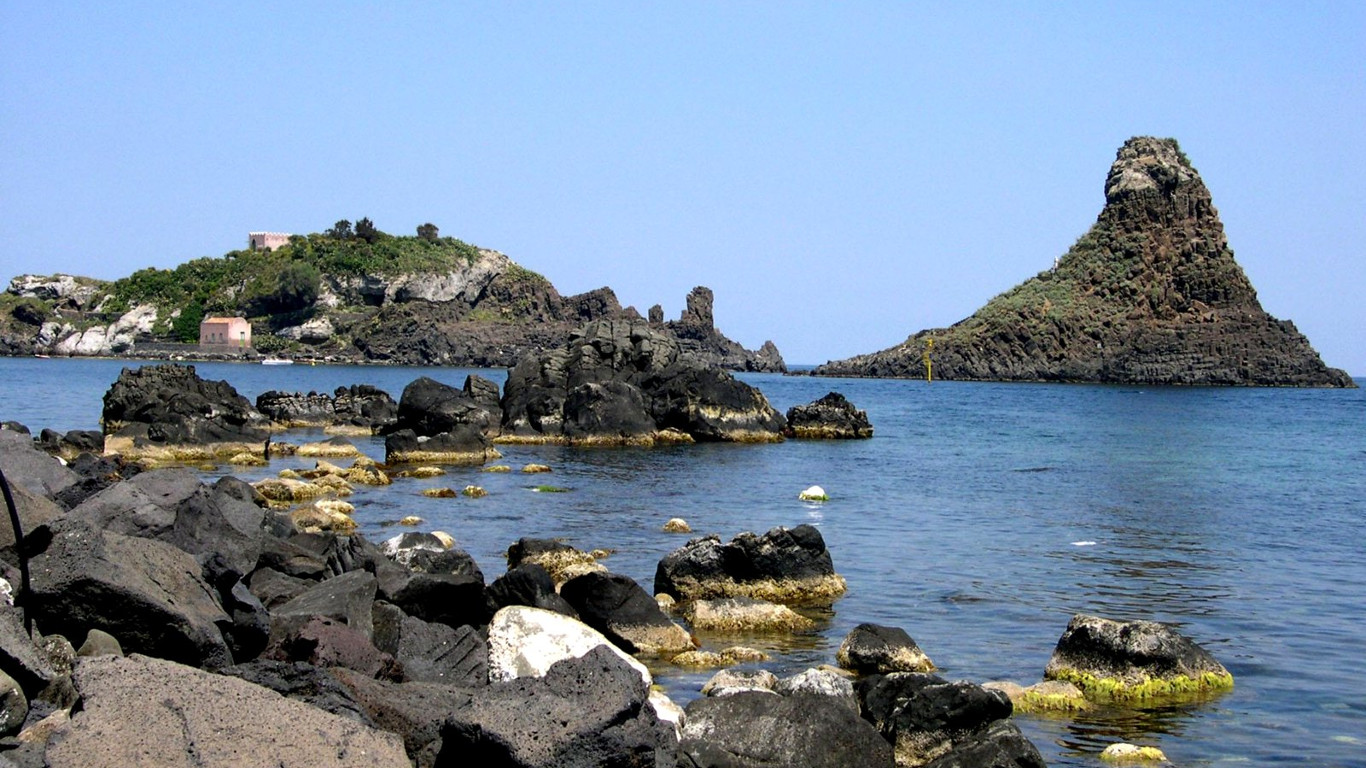
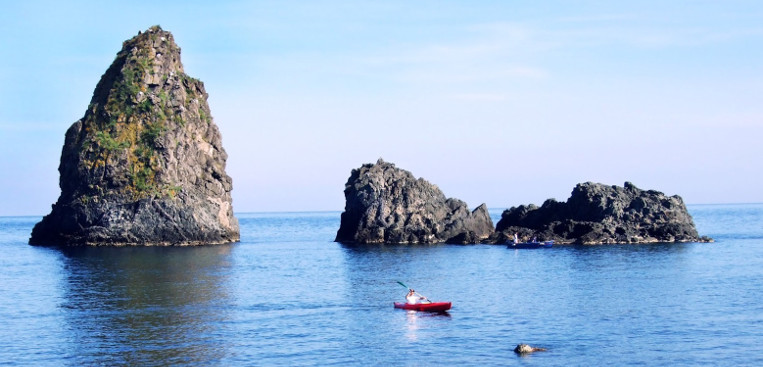
The landscape of the seastacks is so enchanting that it inspired the Greek poet Homer, who in the Odyssey recounts how the formation of the rocks was due to the Cyclops Polyphemus, who, enraged at Ulysses escaping from his clutches, hurled large rocks at the boats.
Just a little further on is Acitrezza, a village in the municipality of Aci Castello, which is just 9 km from Catania, and can therefore be reached in about ten minutes by car from Hotel Nettuno.
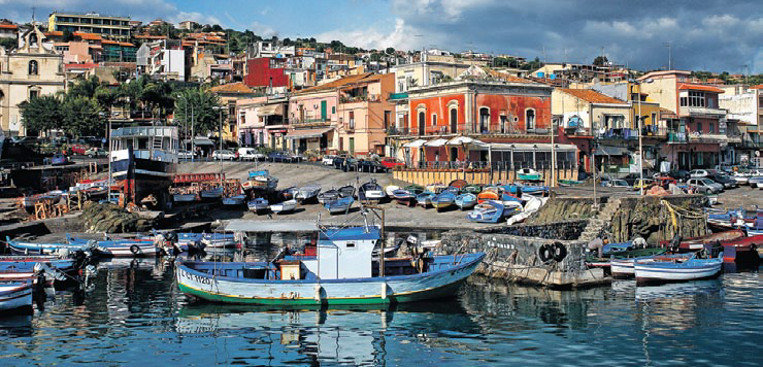
Acitrezza is a small fishing village where eight sea stacks emerge from the crystal-clear waters, volcanic columns that originated before Mount Etna, reaching up to 70 m in height.
It is the perfect location for enjoying a day of sea and nature, lying on the lava stone beaches or on the wooden jetties that are erected during the summer. The shoreline is dotted with lemons, agave and palm trees, a spectacular and unique panorama, and the seabed is ideal for scuba diving.
The village of Acitrezza is also famous because it is the setting for the novel “I Malavoglia”, written by one of the most important Sicilian writers of the 20th century, Giovanni Verga.
About 10 years ago, a marine protected area was established between the municipalities of Aci Castello and Acitrezza to safeguard the marine environment and the aquatic species that live there. At night, you can enjoy stunning views of the seaside village with the sea stacks, illuminated in the evening, and the Norman castle of Aci Castello silhouetted against the sky.
The landscape of the seastacks is so enchanting that it inspired the Greek poet Homer, who in the Odyssey recounts how the formation of the rocks was due to the Cyclops Polyphemus, who, enraged at Ulysses escaping from his clutches, hurled large rocks at the boats.
Just a little further on is Acitrezza, a village in the municipality of Aci Castello, which is just 9 km from Catania, and can therefore be reached in about ten minutes by car from Hotel Nettuno.
Acitrezza is a small fishing village where eight sea stacks emerge from the crystal-clear waters, volcanic columns that originated before Mount Etna, reaching up to 70 m in height.
It is the perfect location for enjoying a day of sea and nature, lying on the lava stone beaches or on the wooden jetties that are erected during the summer. The shoreline is dotted with lemons, agave and palm trees, a spectacular and unique panorama, and the seabed is ideal for scuba diving.
The village of Acitrezza is also famous because it is the setting for the novel “I Malavoglia”, written by one of the most important Sicilian writers of the 20th century, Giovanni Verga.
About 10 years ago, a marine protected area was established between the municipalities of Aci Castello and Acitrezza to safeguard the marine environment and the aquatic species that live there. At night, you can enjoy stunning views of the seaside village with the sea stacks, illuminated in the evening, and the Norman castle of Aci Castello silhouetted against the sky.
The Acireale Carnival, one of the most beautiful and ancient carnivals in Sicily
Acireale, an elegant baroque city, is about 30 minutes from Catania and from Hotel Nettuno.
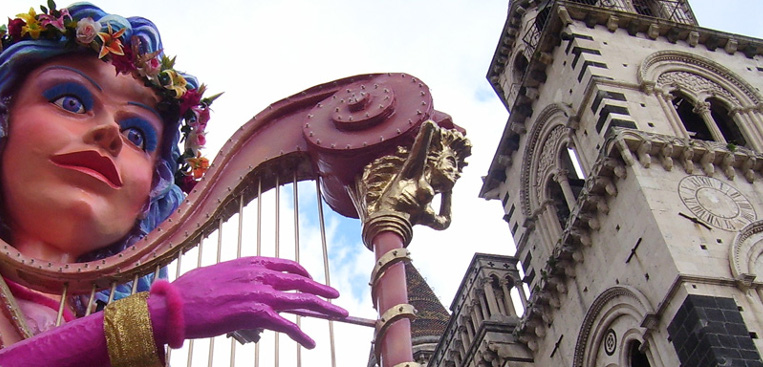
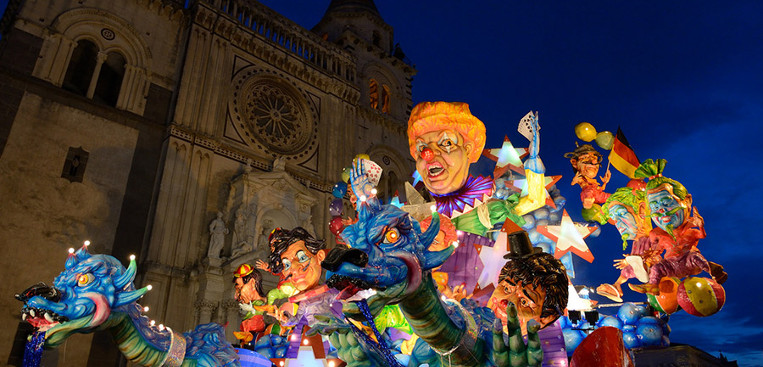
The town is situated on a lava slope, the Timpa, which affords a beautiful view of the Cyclopean Islands Marine Protected Area. Acireale is famous throughout Italy above all for its Carnival, one of the most beautiful and majestic carnivals in Sicily and the third-biggest in Italy where allegorical and floral floats parade through the city's main streets.
The Acese Carnival has very ancient origins. From some documents found, we know for sure that the practice of celebrating carnival dates back to the 16th century. It represented an opportunity to entertain the people, who enjoyed mocking the powerful with caricatures and sneers. There are three types of floats in the parade: finely crafted, grotesque allegorical papier-mâché floats, with lights and bulbs, featuring complex mechanical movements and ever-changing scenery throughout the parade. They are the only floats in the world to feature mechanical and hydraulic lighting and movement systems. They reproduce topics related to satire and social customs in caricature form. Then there are the flower-adorned floats, built with the same characteristics as those of Côte d'Azur and Liguria, with characters created entirely from real flowers and arranged next to each other. These also feature mechanical movements and lights. Finally, the miniature floats: these are small floats, and some are miniatures of the grotesque allegorical floats that parade through the streets.
If you plan a tour of the city of Acireale, its most impressive monuments include the Basilica di San Sebastiano, the symbol of the Baroque Sicilian movement, and the beautiful Villa comunale (Villa Belvedere) where you can see the statues of Acis and Galatea in memory of the legend of the love story between the shepherd boy and the nymph that descends from Mount Etna to the sea.
The town is situated on a lava slope, the Timpa, which affords a beautiful view of the Cyclopean Islands Marine Protected Area. Acireale is famous throughout Italy above all for its Carnival, one of the most beautiful and majestic carnivals in Sicily and the third-biggest in Italy where allegorical and floral floats parade through the city's main streets.
The Acese Carnival has very ancient origins. From some documents found, we know for sure that the practice of celebrating carnival dates back to the 16th century. It represented an opportunity to entertain the people, who enjoyed mocking the powerful with caricatures and sneers. There are three types of floats in the parade: finely crafted, grotesque allegorical papier-mâché floats, with lights and bulbs, featuring complex mechanical movements and ever-changing scenery throughout the parade. They are the only floats in the world to feature mechanical and hydraulic lighting and movement systems. They reproduce topics related to satire and social customs in caricature form. Then there are the flower-adorned floats, built with the same characteristics as those of Côte d'Azur and Liguria, with characters created entirely from real flowers and arranged next to each other. These also feature mechanical movements and lights. Finally, the miniature floats: these are small floats, and some are miniatures of the grotesque allegorical floats that parade through the streets.
If you plan a tour of the city of Acireale, its most impressive monuments include the Basilica di San Sebastiano, the symbol of the Baroque Sicilian movement, and the beautiful Villa comunale (Villa Belvedere) where you can see the statues of Acis and Galatea in memory of the legend of the love story between the shepherd boy and the nymph that descends from Mount Etna to the sea.